 A thrilling ride and a very good book on its own, but as a finale for the series it unfortunately was a bit disappointing.
I loved the Felix Castor books. Mike Carey's witty writing and interesting characterisation made it a wonderful experience to read through all the five books. And while this one was probably the most exciting one of them all, it disappointed me with a stereotypically evil scientist archetype (that for me was just beyond the pale) and with some major unanswered questions that I expected to be addressed after the fourth book's revelation about the nature of (some?) demons and this book's teaser about that one note that suddenly appeared in the world that Castor is trying to play but can't quite manage to.
If you want to know more I will go into more details in the next paragraph, just be careful, we are getting into SPOILER TERRITORY.
WARNING: MAJOR SPOILERS AHEAD!
In "Thicker Than Water" we learned that humans can turn into demons, and were left wondering if all demons where once human. Unfortunately we learn nothing further about this. A huge missed opportunity!
Then there is that seem of something new coming into the world, the world as a whole changing in a mysterious manner. The note that Castor hears but can't quite make out, the zombies talking about the changes, the world not wanting them anymore. This invokes the expectation that it will lead to some kind of revelation, but it never does.
Mike Carey seems to have some major issues with scientists, especially medical scientists, or at least his portrayal of them suggests this. Professor Mulbridge is the stereotypical evil scientist, compared to Nazi doctors, described as having science as her religion (this made me cringe) and appearing to have no morals or conscience. This kind of bad cliché typecasting annoys me, because I am someone who values reason and the scientific approach, and I wish we had more nuanced portrayals than what we get here or in Carey's "The Girl with all the Gifts".
Finally, the way they beat Asmodeus left me a bit puzzled. They shoot Rafi's body him with the tiny glass bits, which supposedly have to remain inside or else the demon will resurface. I am not an expert when it comes to medicine but presumably having tons of sharp bits of glass inside your body would be problematic, no?
Oh, and one more thing: Rafi, from all that we learn about him, seems to be quite a dick, who treated people badly and is solely responsible for the mess he got himself into. At some point I found it very hard the empathise with him. Also, was I the only one that found it odd that he is supposed to be from the Czech Republic, but all his family and the house he grew up in where in Macedonia? Did I miss something or was that an editorial oversight?
So, overall a well written and exciting book, but sadly only a mediocre end chapter for the series.
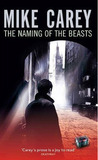
The Naming of the Beasts by Mike Carey
My rating: 3 of 5 stars








.png)